Austin SEO Strategy: From Zero Traffic to Top Rankings
HomeseoAustin SEO Strategy: From Zero Traffic to Top Rankings
Introduction to Austin SEO
If you own a business in Austin, Texas, you already know how competitive this city has become. From South Congress boutiques to tech startups downtown, everyone is fighting for attention online. But here is the truth that most people ignore: having a beautiful website means nothing if nobody can find it. I have seen too many Austin business owners spend thousands on web design only to wonder why their phone never rings. The answer is almost always search engine optimization, or what we call SEO. This article will walk you through a complete Austin SEO strategy that takes you from zero traffic to top rankings. I am not talking about tricks or shortcuts. I am talking about real, sustainable methods that follow what Google actually wants in 2026.
Why Austin Businesses Need SEO in 2026
Austin is growing faster than almost any other city in America. New people move here every single day, and they all use Google to find everything from taco trucks to accountants. If your business does not show up on the first page of search results, you might as well be invisible. The March 2026 Core Update from Google made one thing very clear: helpful, people-first content wins every time. Gone are the days of stuffing keywords or building spammy links. Today, Google rewards businesses that genuinely help their local community. For Austin companies, this is actually good news. You have a unique story, a local angle, and real customers who need your services. SEO in 2026 is about connecting those dots.
Understanding the Austin SEO Market
The Competitive Landscape in Austin
Austin is not a small town anymore. We have major corporations like Dell, Tesla, and Oracle right in our backyard. But here is what most people miss: the real opportunity is in the middle. Small and medium-sized businesses in Austin often get overlooked because everyone focuses on the big players. When I worked on a local plumbing company in North Austin, they were terrified of competing with national chains. But after analyzing the search results, we realized that most big companies had generic, unhelpful content. They talked about plumbing in general terms, not about Austin-specific issues like limestone in the soil or old neighborhood pipes. That was our opening. By focusing on local problems and solutions, we outranked companies ten times our size within six months.
How Local Search Differs from National Search
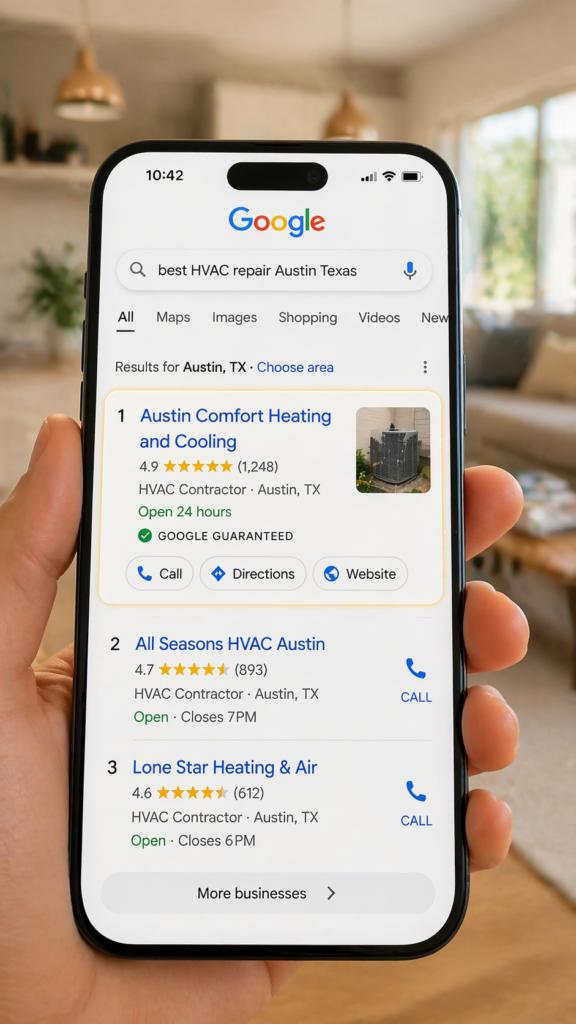
National SEO is about broad keywords like “best shoes” or “cloud software.” Local SEO in Austin is entirely different. People search for things like “coffee shop near Zilker Park” or “emergency AC repair 78704.” The search intent is immediate and action-oriented. Google knows this, which is why local results show maps, reviews, and business hours front and center. Many Austin businesses struggle with understanding this difference. They try to rank for generic terms when they should be dominating their neighborhood. I always tell clients to think like a customer. If your car breaks down on I-35, you are not searching for “best auto repair in the United States.” You are searching for “mechanic near me” or “auto shop Austin Texas.” That shift in thinking changes everything.
Step-by-Step Austin SEO Strategy
Step 1: Audit Your Current Situation
Before you do anything else, you need to know where you stand. Run a basic SEO audit using free tools like Google Search Console and Google Analytics. Look at how many people visit your site, where they come from, and what they do when they get there. Pay special attention to your current rankings for local keywords. If you are not showing up for “Austin SEO” or “local SEO Austin,” that is your starting point. Many business owners skip this step because they find it boring or technical. But I promise you, flying blind is the fastest way to waste time and money.
Step 2: Set Realistic Goals
Do not expect to rank number one for “lawyer Austin” in two weeks. That is not how SEO works. Set goals that actually make sense for your business size and budget. A realistic timeline for a new website in a competitive Austin market is six to twelve months to see significant results. But here is the good news: you will see smaller wins along the way. Maybe you rank for a long-tail keyword like “family dentist in Round Rock” within two months. Maybe your Google Business Profile starts getting more calls. Celebrate those wins. They are the foundation of bigger success.
Step 3: Build Your Foundation
Your website needs to be technically sound before anything else works. Fast loading speed, mobile-friendly design, and secure HTTPS encryption are non-negotiable in 2026. Google has made it clear that user experience is a ranking factor. If your site takes five seconds to load, people will leave, and Google will notice. I have seen beautiful Austin boutique websites that load like molasses because the owner uploaded giant image files. Fixing that one issue often doubles traffic within weeks.
Keyword Research for Austin SEO
Finding the Right Local Keywords
Keyword research for Austin SEO starts with thinking like your customer. Open a notebook and write down every possible way someone might search for your service. Then go to Google and start typing. See what autocomplete suggestions appear. Look at the “People also ask” boxes. Scroll to the bottom of search results and check the related searches. These are goldmines of real search behavior. For example, if you run a landscaping business, you might find that people search for “drought-tolerant landscaping Austin” or “xeriscaping near me.” Those specific phrases have lower competition and higher conversion rates than the broad term “landscaper.”
Using Tools Without Breaking the Bank
You do not need expensive SEO software to do good keyword research. Google Keyword Planner is free if you set up a Google Ads account. AnswerThePublic gives you hundreds of question-based keywords for free each day. Ubersuggest has a solid free tier. When I worked on a local coffee roaster in East Austin, we used nothing but free tools and still found amazing keywords like “best dark roast beans for espresso Austin” and “locally roasted coffee delivery 78702.” The key is not the tool. The key is understanding what your customer actually wants.
Long-Tail Keywords Are Your Best Friend
Long-tail keywords are phrases with three or more words. They have lower search volume but much higher intent. Someone searching for “SEO services in Austin” is further along in their buying journey than someone searching just “SEO.” They know what they want and where they want it. Many Austin businesses ignore long-tail keywords because they look small. But add up ten or twenty of these phrases, and you have a steady stream of qualified traffic. Plus, they are much easier to rank for than one-word terms.
On-Page SEO Strategy
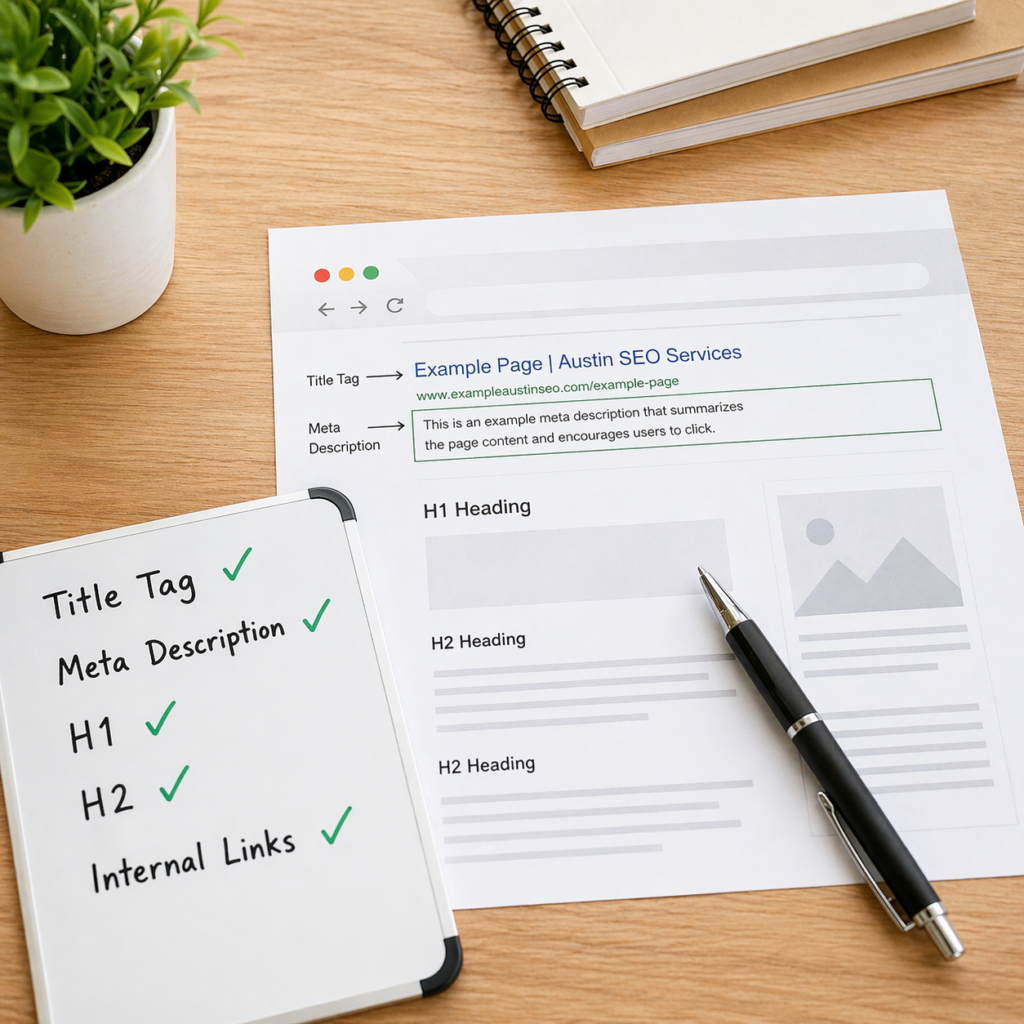
Optimizing Your Title Tags and Meta Descriptions
Your title tag is the first thing people see in search results. It needs to include your primary keyword and a reason to click. “Austin SEO Services | Helpful Content for Local Businesses” works better than “SEO Services” because it speaks to a specific audience. Your meta description is the short paragraph below the title. Use it to expand on your offer and include a secondary keyword. Keep titles under 60 characters and descriptions under 160. This is basic stuff, but you would be shocked how many Austin business owners leave these fields blank or let their website software auto-generate garbage.
Header Tags and Content Structure
Use H1 tags for your main page title. Use H2 tags for major sections like you see in this article. Use H3 tags for subsections. This structure helps Google understand your content hierarchy. It also helps readers scan your page. Nobody reads every word on a webpage. People skim. Good header tags let them find what they need fast. Include your keywords naturally in headers, but do not force it. A header that says “How to Find a Local SEO Expert in Austin” reads naturally and helps your rankings. A header that says “Austin SEO Austin Texas Best Austin SEO Services” reads like spam and will hurt you.
Internal Linking That Makes Sense
Internal links are links from one page of your website to another. They help Google discover all your content and understand which pages are most important. They also keep people on your site longer. If someone reads your blog post about “Austin SEO tips,” link to your services page. If they read a case study, link to a related blog post. Do not just throw random links everywhere. Think about the customer journey. What would they want to read or see next? When I optimized a downtown Austin gym’s website, we added internal links from their class schedule to blog posts about fitness tips. Average time on site increased by over two minutes, and class signups went up.
Local SEO for Austin Businesses
Optimizing Your Google Business Profile
Your Google Business Profile is the most important local SEO asset you have. It controls how you appear in maps and the local pack (those three business listings that show up above organic results). Fill out every single section completely. Choose the most accurate categories. Add your hours, phone number, website, and address. Upload photos regularly of your business, your team, and your work. Google loves fresh photos. Respond to every review, both good and bad. When you get a positive review, thank the customer and mention something specific they said. When you get a negative review, apologize publicly and take the conversation offline to resolve it.
Building Local Citations
Citations are mentions of your business name, address, and phone number on other websites. Think Yelp, Yellow Pages, BBB, and local Austin directories like the Austin Chamber of Commerce. The key is consistency. Your NAP (name, address, phone) must be identical everywhere. Even a small difference like “Suite 100” versus “#100” can confuse Google. Use a service like Moz Local or BrightLocal to find and fix citation errors. Many Austin businesses struggle with this because they have changed addresses or phone numbers over the years. Old citations still floating around the internet create confusion. Cleaning them up is tedious but worth it.
Getting Local Reviews
Reviews are social proof for both customers and Google. A business with 50 recent positive reviews will almost always outrank a business with 5 old reviews. Make it easy for happy customers to leave reviews. Send a follow-up email with a direct link to your Google review form. Put a QR code on your receipts that goes straight to your review page. Train your staff to ask in person after a positive interaction. Never buy fake reviews or incentivize only positive ones. Google is getting very good at detecting fake activity, and the penalties are severe.
Technical SEO Basics
Improving Site Speed
Site speed affects everything. Slow sites rank lower, convert worse, and frustrate users. Use Google PageSpeed Insights to test your site for free. It will give you specific recommendations. Common fixes include compressing images, enabling browser caching, and removing unused code. If you use WordPress, plugins like WP Rocket or W3 Total Cache can help. Many Austin businesses are hosted on cheap shared hosting that slows everyone down. Upgrading to a better host often pays for itself in higher rankings and more sales.
Mobile Optimization
Over sixty percent of all searches now happen on mobile devices. In Austin, that number is even higher because of our young, tech-savvy population. Your website must work perfectly on phones. That means readable text without zooming, buttons that are easy to tap, and no horizontal scrolling. Google uses mobile-first indexing, meaning it looks at your mobile site to determine rankings. If your desktop site is beautiful but your mobile site is broken, you will rank poorly. Test your site on multiple devices and ask friends to try it. What seems fine to you might be frustrating to someone else.
Fixing Crawl Errors
Google sends bots called crawlers to explore your website. If these bots hit broken links or error pages, they cannot index your content properly. Google Search Console shows you all crawl errors. Fix them by redirecting broken links to working pages or restoring missing content. This is technical but not difficult. Many Austin business owners ignore crawl errors because they do not understand them. That is a mistake. Clean crawl health is the foundation of good SEO.
Content Strategy for Ranking
Creating Helpful, Local Content
The March 2026 Core Update doubled down on helpful content. Google wants to see content created for people, not search engines. For Austin businesses, this means writing about local topics that actually matter to your community. A real estate agent might write “Living in 78704: A Complete Neighborhood Guide.” A dentist might write “Best Teeth Whitening Options in South Austin.” These articles show expertise and local knowledge. They answer real questions. And they naturally attract backlinks from other local sites. When I worked on a local bakery, we wrote a blog post about “Austin’s Best Gluten-Free Bakeries” that included our competitors. That post got shared everywhere and brought us more traffic than any self-promotional content ever did.
Content Formats That Work
Different people like different content formats. Some want step-by-step guides. Some want quick lists. Some want videos or infographics. Mix it up. Write detailed how-to articles for people who want depth. Create checklist-style posts for people who want actionable steps. Record short videos explaining concepts and embed them in your posts. The more ways you present your information, the more people you reach. Just make sure every format adds value. A five-minute video of you talking without a script is not helpful. A two-minute video showing exactly how to fix a common problem is gold.
Updating Old Content
SEO is not a set-it-and-forget-it thing. Old content gets stale. Statistics change. Links break. Best practices evolve. Set a schedule to review your important pages every six months. Update statistics, add new examples, and refresh the language. When you make significant updates, change the publish date to show freshness. Google notices when content is actively maintained. Many Austin businesses have great blog posts from three years ago that nobody reads anymore because they look outdated. A few hours of updating can bring those pages back to life.
Link Building Strategies in Austin
Earning Links Through Local Partnerships
Link building is the hardest part of SEO for most people. But in Austin, you have advantages that national businesses do not. Partner with complementary local businesses. A wedding photographer could get a link from an Austin wedding venue. A personal trainer could get a link from a healthy restaurant. Write guest posts for local blogs and news sites. Sponsor local events and get listed as a sponsor. Join the Austin Chamber of Commerce and get a directory link. These are natural, high-quality links that Google loves. Do not buy links from shady websites. That might work for a month, but the eventual penalty will destroy your rankings.
Creating Linkable Assets
A linkable asset is content so good that other people want to link to it. Original research works great. Survey your customers and publish the results. Create a detailed guide to something in Austin that nobody else has covered. Make an infographic that explains a complex local issue simply. When I worked with an Austin solar company, we created a map showing solar potential for every zip code in the city. That map got links from environmental blogs, real estate sites, and even a local news station. One piece of content brought in more links than six months of manual outreach.
Avoiding Bad Links
Not all links help you. Some actively hurt. Links from spammy directories, link farms, or irrelevant sites can trigger Google penalties. Use Google Search Console to see who links to you. If you see suspicious sites, use the disavow tool to tell Google to ignore them. Many Austin business owners think any link is good because they heard links matter. That was true ten years ago. Today, quality matters far more than quantity. One link from the Austin American-Statesman is worth more than a hundred links from random blog comments.
Measuring SEO Success
Key Metrics That Actually Matter
Do not obsess over rankings for one keyword. SEO is broader than that. Track organic traffic (how many people find you through search). Track conversion rate (how many of those people take action). Track keyword rankings across a set of relevant terms. Track your click-through rate from search results. Track your Google Business Profile views and calls. A holistic view tells you much more than any single number. I have seen Austin businesses celebrate ranking number one for a keyword that nobody searches while their actual sales stayed flat. Do not be that person.
Using Google Analytics and Search Console
Google Analytics shows you what people do on your site. Google Search Console shows you how Google sees your site. Use both. In Analytics, look at which pages get the most traffic, how long people stay, and where they drop off. In Search Console, look at your average position, total impressions, and click-through rate. Pay special attention to queries that put you on page two of results. Those are low-hanging fruit. Optimize those pages a little more, and you can jump to page one.
Setting Up Goal Tracking
If you are not tracking goals, you do not know if your SEO is working. Goals can be form submissions, phone calls, online purchases, or any other valuable action. Set them up in Google Analytics so you can see which traffic sources drive the most results. This data tells you where to focus. Maybe your blog posts bring lots of traffic but few conversions. That means you need better calls to action. Maybe your service pages bring fewer visitors but almost all of them convert. That means you should drive more traffic there.
Common SEO Mistakes to Avoid
Ignoring Local Intent
The biggest mistake I see Austin businesses make is targeting keywords that are too broad. They want to rank for “SEO services” when they should rank for “SEO services in Austin.” They write generic content that could apply to any city. Google knows where you are. Google knows where your customer is. If you ignore local signals, you will lose to competitors who embrace them. Many Austin businesses struggle with this because they think local SEO is less prestigious than national SEO. That is nonsense. Local customers pay your bills.
Neglecting User Experience
SEO and user experience are the same thing now. Google tracks how people interact with your site. If they click your result and immediately hit the back button, Google thinks your result was not helpful. That will drop your rankings. So make your pages easy to read. Break up text with headers and images. Write in short paragraphs. Use bullet points when they make sense. Make your forms short and simple. Every barrier you remove helps both your users and your rankings.
Expecting Overnight Results
SEO takes time. Anyone who promises you number one rankings in thirty days is lying. Google has built its entire business on providing the best results. It does not let people game the system quickly. Real SEO takes three to six months to show meaningful movement and six to twelve months for competitive terms. Many Austin business owners give up after two months because they do not see results. That is like planting a seed and digging it up to check if it grew. Be patient. Do the work. Trust the process.
Future of SEO in Austin
AI and Search
Google is integrating AI into search more than ever. The Search Generative Experience (SGE) and AI Overviews are changing how people get answers. But here is the key: AI does not create new information. It summarizes existing content. So the businesses that win will be the ones creating unique, helpful content that AI wants to cite. Write detailed guides. Share original data. Answer questions that nobody else answers. That is how you become an AI source rather than getting replaced by AI.
Voice Search and Conversational Queries
More people in Austin are using voice search through Siri, Google Assistant, and Alexa. Voice searches are longer and more conversational. Instead of typing “Austin SEO,” someone might ask “Hey Google, who is the best SEO company near downtown Austin?” Optimize for these natural language queries by including question-and-answer sections on your pages. Write like you talk. The formal, keyword-stuffed content of the past sounds unnatural when spoken aloud.
The Growing Importance of EEAT
Experience, Expertise, Authoritativeness, and Trustworthiness are Google’s framework for evaluating content. In 2026, this matters more than ever. Show your experience by sharing real stories and case studies. Show your expertise by writing accurately and citing sources. Build authority by earning links from respected sites. Build trust by being transparent about who you are and how you operate. Many Austin businesses have great products but fail to communicate their EEAT. Fixing that gap is one of the fastest ways to improve rankings.
Conclusion
Going from zero traffic to top rankings in Austin is absolutely possible, but it requires a real strategy, consistent effort, and patience. You need good keyword research, a technically sound website, helpful local content, and genuine links from the Austin community. You also need to avoid common mistakes like ignoring local intent or expecting overnight results. The March 2026 Core Update made one thing clear: shortcuts do not work anymore. Google is too smart, and competition is too high. But here is the good news. Most businesses still do SEO poorly. They write thin content, ignore their Google Business Profile, and give up after two months. That means the opportunity is huge for anyone willing to do things right. Start with one thing from this article today. Audit your Google Business Profile or fix your site speed or write one genuinely helpful blog post about your Austin neighborhood. Small steps add up over time. And if you ever feel stuck, remember that every successful Austin business you see ranking on page one started exactly where you are now.
Frequently Asked Questions
How much does SEO cost in Austin?
SEO pricing in Austin typically ranges from fifteen hundred to five thousand dollars per month for small to medium businesses. Freelancers charge less, agencies charge more, and extremely competitive industries can cost ten thousand or more. Always ask for case studies and clear deliverables before signing any contract.
How long does it take to see results from Austin SEO?
Most businesses see initial movement in three to six months and significant ranking improvements in six to twelve months. New websites or highly competitive niches take longer. Anyone promising results in under thirty days is likely using black-hat techniques that will eventually get you penalized.
What is the difference between local SEO and regular SEO?
Local SEO focuses on ranking in map packs and for location-based searches like “near me” or “Austin Texas.” Regular SEO focuses on broader organic rankings. Local SEO requires a Google Business Profile, local citations, and reviews. Most Austin businesses need both, but local SEO is usually the higher priority.
Can I do SEO for my Austin business myself?
Yes, many business owners successfully learn and implement basic SEO themselves. Start with optimizing your Google Business Profile, fixing obvious on-page issues, and writing helpful local content. As you grow, consider hiring an expert for technical SEO and link building, which have steeper learning curves.
Why did my Austin SEO rankings drop suddenly?
Sudden drops usually come from a Google algorithm update, a technical issue like a site crash or slow loading, lost backlinks, or increased competition. Check Google Search Console for messages or errors. Look at the date of recent algorithm updates. Compare your site to competitors who outrank you now.
Do I need to hire an Austin SEO agency or can I use a freelancer?
Agencies offer more resources and accountability but cost more. Freelancers offer lower rates and personal attention but may lack specialized skills. The best choice depends on your budget and needs. Interview multiple options and ask detailed questions about their process, reporting, and experience with Austin businesses.
Is SEO worth it for a small local Austin business?
Absolutely. Small businesses often benefit more from SEO than large ones because local searches have less competition and higher purchase intent. A coffee shop, plumber, or boutique that ranks well for neighborhood keywords can get a steady stream of new customers without paying for ads every single day.