Compare SEO vs social media marketing for business growth in 2026. Learn differences, cost, ROI, traffic quality, and which strategy is best for you.
Digital marketing is no longer optional. In 2026, every business — small, medium, or enterprise — depends on online marketing to grow. But one big question still confuses many business owners: SEO vs Social Media Marketing — which one is better for business growth?
I have worked with businesses that invested only in search engine optimization, and I have also seen brands grow fast using social media marketing. The truth is not simple. SEO and social media both play powerful roles in digital marketing strategy, but they work differently.
In this updated guide, we will compare SEO vs social media marketing based on traffic, cost, ROI, lead generation, long-term growth, and brand awareness — so you can decide what works best for your business.
What is SEO? (Search Engine Optimization Explained)
SEO, or search engine optimization, is the process of improving a website so it ranks higher on search engines like Google. When someone searches for a product or service, SEO helps your website appear in the top results.
From my experience, SEO focuses on organic traffic. This means you do not pay for every click. Instead, you optimize your website using keyword research, content marketing, technical SEO, link building, and website optimization.
Businesses that invest in SEO services aim for long-term visibility. Once a page ranks, it can generate leads and sales continuously without daily ad spending. That is why many marketers call SEO a long-term digital asset.
Types of SEO
There are different types of SEO that businesses use for growth. On-page SEO focuses on content optimization, meta tags, internal linking, and keyword placement. Off-page SEO includes link building, backlinks, and brand mentions. Technical SEO improves website speed, mobile friendliness, structured data, and crawlability.
Local SEO is essential for businesses targeting a specific city or state. E-commerce SEO helps online stores rank product pages. Enterprise SEO supports large websites with thousands of pages. In 2026, AI-driven SEO optimization and search intent analysis have become even more important.
Key SEO Activities
SEO includes keyword research, competitor analysis, content creation, blog optimization, backlink strategy, technical audits, and performance tracking using analytics tools. Many businesses hire an SEO agency or SEO specialist to manage ongoing optimization because search algorithms update regularly.
What is Social Media Marketing?
Social media marketing is the use of platforms like Facebook, Instagram, LinkedIn, YouTube, TikTok, and X (Twitter) to promote a business, build brand awareness, and generate engagement.
Unlike SEO, social media marketing focuses on audience attention while they scroll. It includes organic posting, paid ads, reels, short videos, influencer marketing, and community management.
I have seen startups grow fast through Instagram reels and Facebook ads. Social media allows instant visibility. However, results often depend on consistent content and ad budget.
Major Social Media Platforms for Business
Businesses use Facebook marketing for community building and ads. Instagram marketing works well for visual brands. LinkedIn marketing is powerful for B2B lead generation. YouTube marketing supports long-form and short-form video SEO. TikTok marketing helps brands reach younger audiences. Pinterest works for lifestyle and e-commerce brands.
Each platform has a different algorithm and audience behavior, which affects engagement rate and conversion rate.
Key Social Media Activities
Social media strategy includes content posting, video marketing, paid social media ads, influencer collaborations, hashtag research, audience targeting, and analytics tracking. Many brands also run retargeting ads to convert cold traffic into paying customers.
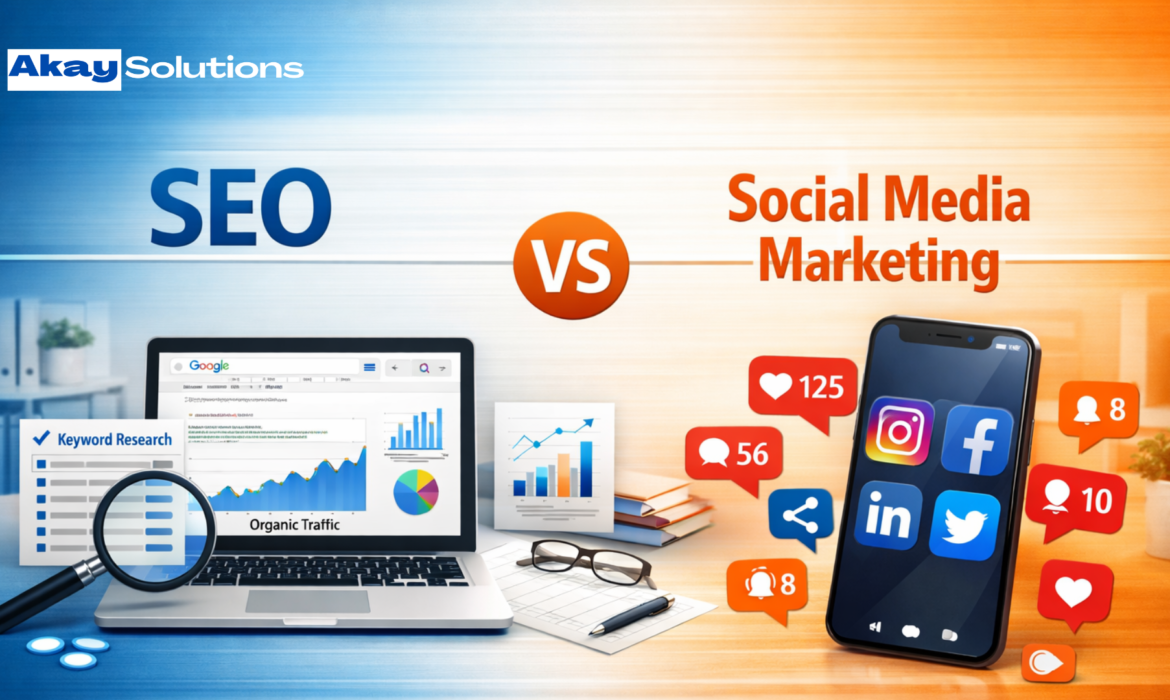
SEO vs Social Media Marketing – Key Differences
When comparing SEO vs social media marketing, the biggest difference is user intent. SEO captures high-intent search traffic. People actively search for a solution. Social media reaches users who are browsing, not necessarily searching.
SEO is long-term and sustainable. Social media is fast but often short-term. If you stop SEO, rankings may slowly drop. If you stop social media ads, traffic stops immediately.
SEO improves website authority and domain trust over time. Social media improves brand visibility and engagement.
Traffic Quality Comparison
Search engine traffic usually has higher buying intent. For example, if someone searches “best digital marketing agency near me,” they are ready to purchase. This makes SEO powerful for lead generation.
Social media traffic may include cold audiences. However, strong targeting and retargeting campaigns can improve lead quality. Bounce rates are often lower for SEO traffic because users are searching with purpose. Social media traffic depends heavily on content quality and targeting accuracy.
Cost Comparison
SEO requires initial investment in content marketing, technical optimization, and backlinks. But once rankings improve, cost per lead becomes lower over time.
Social media marketing can start with a small budget, but ad costs increase as competition grows. In 2026, paid advertising costs on major platforms are rising. Businesses must continuously invest to maintain visibility.
From an ROI perspective, SEO usually delivers better long-term returns, while social media provides faster short-term results.
Benefits of SEO for Business Growth
SEO builds sustainable organic traffic. It increases online visibility, brand credibility, and website authority. When a website ranks on the first page of Google, users trust it more.
Businesses that focus on SEO often experience consistent lead generation without depending entirely on paid ads. In competitive industries, ranking high in search results gives a strong advantage.
When SEO is the Best Choice
SEO is ideal for service-based businesses, local businesses, B2B companies, consultants, healthcare providers, and high-ticket product sellers. If a business wants passive lead generation and long-term growth, SEO is often the smarter choice.
Benefits of Social Media Marketing for Business Growth
Social media marketing builds brand awareness quickly. It increases engagement, shares, comments, and community interaction. Viral content can generate massive exposure in a short time.
For new businesses, social media helps introduce products to the market faster. It also supports storytelling and brand personality development.
When Social Media is the Best Choice
Social media works best for fashion brands, beauty products, influencers, event promotions, startups, and visually driven industries. If a company wants fast attention, product launches, or audience engagement, social media marketing can be powerful.
SEO and Social Media Together – The Smart Strategy

In my opinion, the smartest strategy in 2026 is combining SEO and social media marketing.
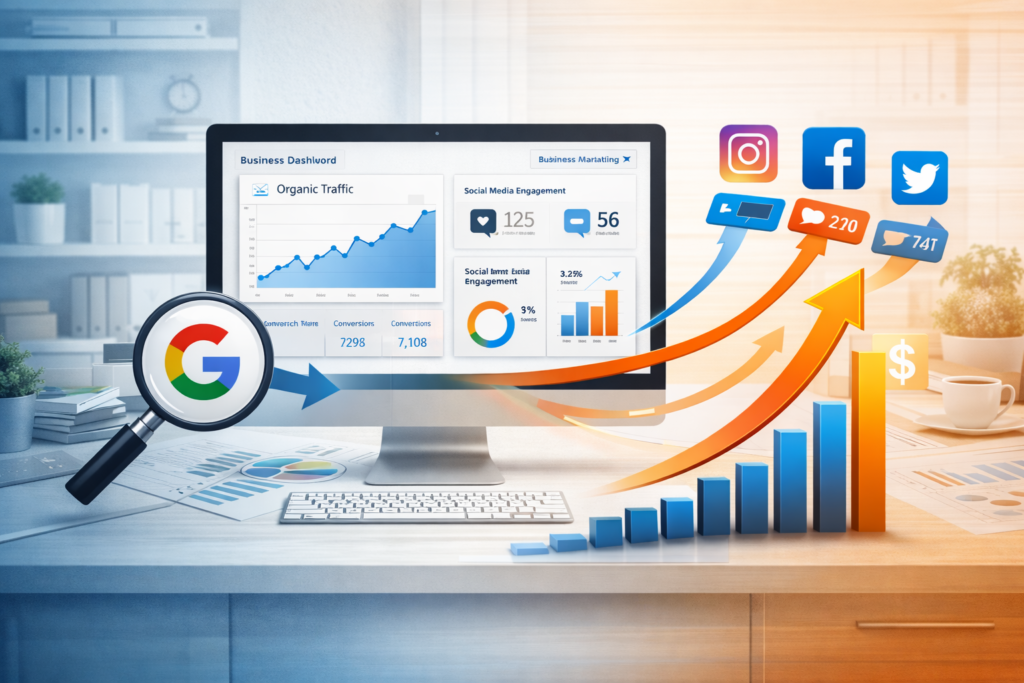
SEO drives long-term search traffic. Social media amplifies content reach. When businesses publish blog content optimized for keywords and then promote it through social media channels, they maximize visibility.
Social media signals may not directly impact rankings, but increased brand searches and traffic can support overall SEO performance.
How to Combine SEO and Social Media
Businesses can publish SEO-optimized blog posts and create Instagram reels summarizing them. They can upload YouTube videos optimized with keywords and share short clips on social platforms. LinkedIn articles can link back to website landing pages. Paid ads can retarget website visitors generated through organic search.
Many businesses aiming to offer the best digital marketing in Hyderabad use this integrated strategy. They combine SEO, content marketing, and social media campaigns to increase visibility and drive more leads.
This integrated digital marketing strategy improves conversion rate and brand growth.
Which is Better for Your Business?
There is no universal winner in the SEO vs social media marketing debate. The better option depends on your business goals, budget, industry, and timeline.
If you want long-term organic traffic and steady leads, SEO is better. If you want quick visibility and brand awareness, social media marketing is better. If you want sustainable growth and strong online presence, combining both is the best strategy.
Many successful businesses today use search engine optimization for lead generation and social media marketing for engagement and branding.
Final Verdict: SEO vs Social Media Marketing
SEO and social media marketing are not competitors. They are complementary digital marketing channels.
SEO builds authority, trust, and long-term business growth. Social media builds attention, community, and rapid engagement.
In 2026, businesses that integrate SEO strategy, content marketing, paid ads, social media campaigns, and analytics tracking will dominate their industry.
For example, many growing brands investing in social media marketing in Hyderabad are combining local SEO strategies with targeted Instagram and Facebook campaigns to increase visibility and lead generation. I have seen businesses in Hyderabad scale faster when they align search engine optimization with strong regional social media engagement.
If I had to choose for serious long-term business growth, I would invest in SEO first and then scale with social media marketing. But smart marketers understand that balanced digital marketing delivers the best ROI.
FAQs
1. Is SEO better than social media marketing for business growth?
SEO is better for long-term organic traffic and consistent lead generation. Social media marketing is better for fast visibility and brand awareness. The best strategy is often combining both for maximum business growth.
2. Which gives faster results: SEO or social media marketing?
Social media marketing usually gives faster results because paid ads and viral content can generate immediate traffic. SEO takes time but provides sustainable and long-term results.
3. Is SEO cheaper than social media marketing?
SEO requires an initial investment in content, optimization, and backlinks, but it becomes more cost-effective over time. Social media marketing may require continuous ad spending to maintain visibility.
4. Can social media improve SEO rankings?
Social media does not directly improve search engine rankings. However, increased brand awareness, website traffic, and content sharing can indirectly support SEO performance.
5. Should small businesses choose SEO or social media marketing?
Small businesses with limited budgets often benefit from starting with SEO for long-term organic growth. However, combining SEO with targeted social media campaigns can deliver better overall results.