What is SEO in Digital Marketing? A Complete Beginner’s Guide 2025
HomeDigital marketingWhat is SEO in Digital Marketing? A Complete Beginner’s Guide 2025
Discover what SEO in digital marketing is, how SEO works, and why it’s essential for online success. Learn SEO strategies, best practices, and ranking tips.
Introduction
In today’s digital world, every business wants online visibility, and that’s where SEO (Search Engine Optimization) plays a key role in digital marketing. SEO in digital marketing helps websites appear higher on search engine results like Google, Bing, or Yahoo. When done right, SEO brings organic traffic, improves brand awareness, and increases conversions.
From on-page SEO to off-page SEO and technical SEO, every SEO strategy is designed to improve SEO ranking factors, site speed, user experience, and overall SEO performance. Whether it’s a small business SEO or enterprise SEO campaign, understanding what SEO is and how SEO works is the first step to online success.
What is SEO in Digital Marketing?
What is SEO in digital marketing? SEO stands for Search Engine Optimization, a process of optimizing websites to rank higher in search engine results pages (SERPs). SEO helps in content optimization, keyword research, and link building to increase website visibility.
In simple terms, SEO in digital marketing ensures that your target audience finds you when they search using long-tail keywords, LSI keywords, or related queries. It combines technical SEO, on-site optimization, and off-site optimization techniques to make your website SEO-friendly, crawlable, and indexable for search engines.
Why is SEO Important in Digital Marketing?
The importance of SEO in digital marketing lies in its ability to generate organic traffic without relying on paid ads. Benefits of SEO include higher visibility, better user trust, and improved click-through rate (CTR).
Good SEO also increases your page authority, domain authority, and overall SEO ROI. Unlike SEM (Search Engine Marketing) or PPC ads, SEO delivers long-term results by improving content freshness, evergreen content SEO, and keyword rankings.
For businesses, the importance of SEO extends to better SEO performance metrics, such as lower bounce rate, higher dwell time, and more conversions from search intent-based users.
Types of SEO in Digital Marketing
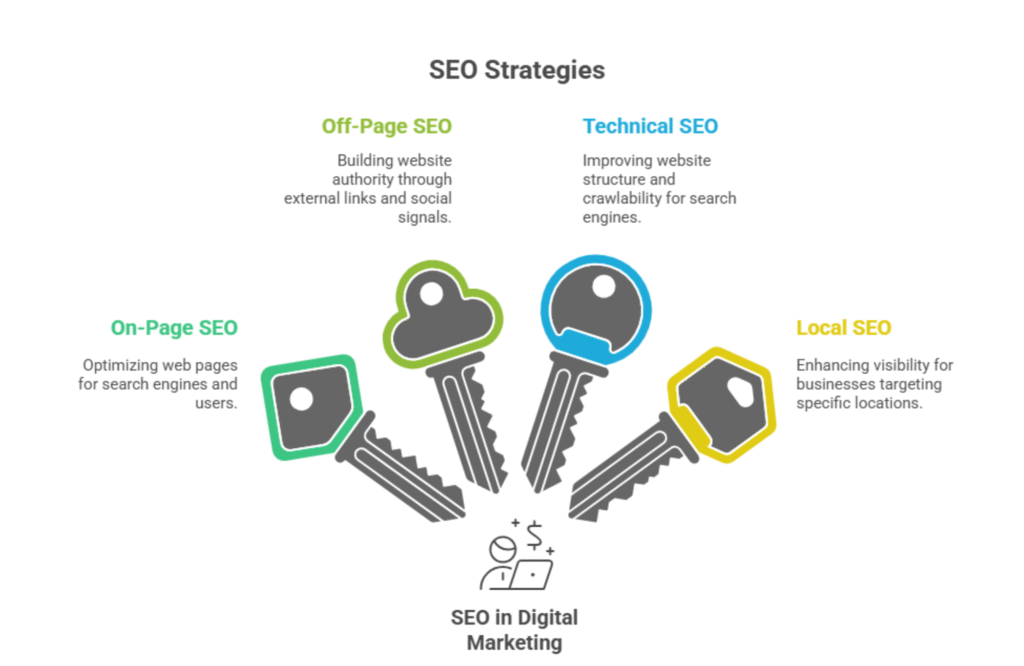
On-Page SEO
On-page SEO involves optimizing web pages with proper title tag optimization, meta description SEO, heading tags (H1, H2, H3), and keywords in the first paragraph. It includes using alt text for image SEO, URL optimization, and maintaining proper SEO keyword density. Other key factors are content optimization, internal linking, and ensuring SEO-friendly content that matches user intent and search intent. Proper use of meta tags SEO, canonical tags, and schema markup SEO ensures your page is both user-friendly and search engine-friendly.
Off-Page SEO
Off-page SEO focuses on link building strategies, guest posting SEO, backlink building, and social signals and SEO. These techniques improve your website’s authority and trust. Backlink audit, broken link building, HARO for SEO, and influencer outreach are also key SEO techniques. NoFollow vs DoFollow links, anchor text optimization, and domain authority building all affect how Google’s algorithm updates rank your website.
Technical SEO
Technical SEO deals with improving website structure and crawlability. It includes site speed optimization, mobile SEO, responsive website SEO, and Core Web Vitals like LCP, FID, and CLS. Creating XML sitemaps, using robots.txt SEO, and fixing crawl errors ensure indexability. HTTPS / SSL, secure website SEO, and canonicalization help maintain SEO compliance. Tools like Google Search Console for SEO and SEO audit tools are essential for regular technical audits.
Local SEO
Local SEO is important for businesses targeting a specific location. It involves Google My Business SEO, local citations, NAP consistency (Name, Address, Phone), and reviews & ratings SEO. Adding schema for reviews, FAQ schema, and optimizing for Google Maps improves local listings SEO. Whether you’re optimizing for a city or region, local SEO tips help increase local search visibility.
How Does SEO Work?
To understand how SEO works, it’s important to know the crawling, indexing, and ranking processes of search engines. Search engines send bots to crawl websites, index them based on SEO content writing, heading structure, internal linking, and page speed.
SEO ranking factors like backlink quality, content relevancy, and SEO keyword density influence rankings. Google algorithms like RankBrain, BERT, and Hummingbird update analyze search intent, semantic SEO, and natural language processing (NLP).
Google Analytics SEO and Google Search Console help monitor SEO performance and identify opportunities for SEO improvement.
Key SEO Strategies for Digital Marketing Success
Effective SEO strategies combine both on-site and off-site optimization. It starts with keyword research using tools like Google Keyword Planner, Ahrefs, and SEMrush. Then comes content optimization, SEO content marketing, and blogging for SEO services in Hyderabad by oxygen.
Creating pillar content, topic clusters, and internal linking clusters improves SEO structure. Link building through guest posting, outreach campaigns, and broken link outreach enhances domain authority.
Technical SEO best practices like page speed optimization, image compression (gzip), lazy loading, and mobile-first indexing are vital. Monitoring SEO metrics and updating content freshness ensure consistent organic traffic growth.
SEO vs. Other Digital Marketing Strategies
When comparing SEO vs SEM, SEO vs SMO, or SEO vs SMM, SEO focuses on organic visibility, while SEM includes paid advertising. SEO takes time but builds sustainable growth, whereas PPC delivers instant results.
SEO also supports content marketing, social media marketing, and email campaigns by driving organic users. While SEM might give quick leads, SEO builds trust, authority, and long-term audience engagement.
Common SEO Mistakes to Avoid
Many beginners make SEO mistakes like keyword stuffing, ignoring meta tags SEO, or neglecting technical SEO. Duplicate content, broken images, and poor internal link structure can hurt rankings.
Avoid black hat SEO practices such as buying backlinks, cloaking, or spammy anchor texts. Always follow white hat SEO techniques, Google Webmaster Guidelines, and SEO best practices 2025.
Regular SEO audit checklists, technical audits, and SEO performance tracking help maintain compliance and avoid Google penalties.
Tools to Improve SEO Performance
There are many SEO tools to enhance your strategy. Tools like Ahrefs, SEMrush, Moz, and Ubersuggest SEO tool help in competitor keyword research, keyword gap analysis, and content gap analysis.
Google Analytics SEO, Google Search Console, and Bing Webmaster Tools monitor traffic and SEO performance metrics. Yoast SEO plugin tips and Rank Math SEO plugin tips are great for WordPress SEO optimization.
For deeper analysis, use SEO audit tools, page speed checkers, and schema markup generators.
Future of SEO in Digital Marketing
The future of SEO is driven by AI in SEO, voice search SEO, and visual content optimization. With mobile-first indexing and Core Web Vitals, Google focuses more on user experience and SEO.
Upcoming SEO trends 2025 include AI-generated content, SEO automation, and natural language search. Future Google core updates will reward websites with strong content quality, E-E-A-T signals, and SEO compliance.
Businesses that adapt to SEO updates 2025, voice search optimization tips, and mobile SEO strategies will dominate organic rankings.
Conclusion
To sum up, SEO in digital marketing is the foundation of online success. Understanding what is SEO, how SEO works, and applying the right SEO strategies ensures long-term growth.
From on-page SEO to technical SEO, every element contributes to better rankings and organic traffic growth. By focusing on SEO best practices, staying updated with Google algorithm changes, and continuously improving SEO performance, you can achieve sustainable online visibility.
If you haven’t started yet, it’s the right time to build your SEO roadmap, perform an SEO audit, and implement proven SEO techniques to grow your business organically.
FAQ
1. What does SEO mean in digital marketing?
SEO stands for Search Engine Optimization, which is the process of improving your website’s visibility on search engines like Google and Bing. It involves on-page SEO, off-page SEO, and technical SEO to help your site rank higher, attract organic traffic, and build brand authority in digital marketing.
2. How does SEO help in online business growth?
SEO in digital marketing helps businesses grow by driving organic visitors who are actively searching for your products or services. Through proper keyword research, content optimization, and link building strategies, SEO improves traffic quality, increases conversion rates, and delivers long-term results without relying on paid ads.
3. What are the main types of SEO?
The main types include on-page SEO, off-page SEO, technical SEO, and local SEO. On-page SEO focuses on optimizing meta tags, keywords, and content, while off-page SEO builds backlinks and authority. Technical SEO improves site speed, crawlability, and mobile responsiveness, and local SEO helps target customers in specific geographic areas.
4. How long does SEO take to show results?
SEO results usually take around 3 to 6 months, depending on competition, domain authority, and the strength of your SEO strategies. Continuous content updates, link building, and technical SEO improvements help maintain and grow your rankings over time, ensuring steady organic traffic growth.
5. Is SEO better than paid advertising?
Yes, SEO is better for long-term digital marketing success compared to paid ads. While paid advertising offers instant visibility, SEO delivers sustainable organic growth and higher ROI over time. By investing in SEO best practices, businesses can maintain strong rankings, increase credibility, and reduce dependency on paid campaigns.